
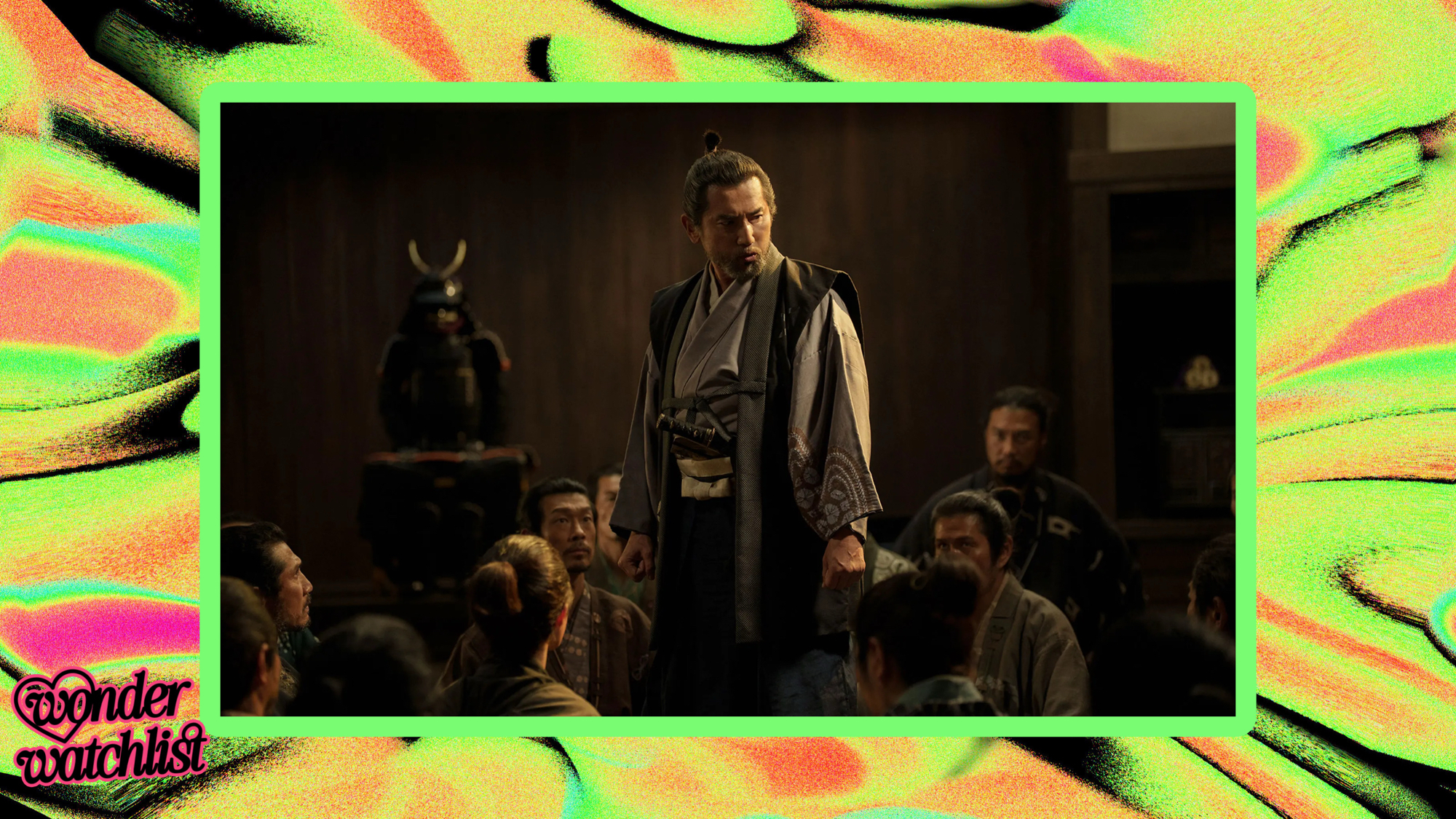
The Samurai and the Prisoner synopsis: “Inside sealed Arioka Castle during a rebellion against Oda Nobunaga, rebel Araki Murashige and captive strategist Kuroda Kanbei engage in a tense battle of wits to solve mysterious crimes.”
Kiyoshi Kurosawa is no stranger to crafting stories that focus on the weight that morals hold over us. He places obstacles in front of his characters that we, as the audience, face daily, as in his last feature, Cloud, where the main character does what he must to make ends meet, feeding into his greed. Much like Cloud, his newest feature, The Samurai and the Prisoner, which showed at the 30th Fantasia International Film Festival, doesn’t show its cards right away, making it a samurai murder mystery for the ages.
Based on the 2021 novel of the same name by Honobu Yonezawa, it’s a Japanese period piece with a shocking twist. Yet from the film’s lavish set pieces and costuming, it wouldn’t be entirely suspected that behind the beauty lies a mystery that Kurosawa plays into perfectly. The story is based on true events in 16th-century Japan and offers a glimpse into how samurai handled whispers from their most loyal men. It shows how they question their leaders’ authority and how suspicions can destroy confidence.

Centrally, the film revolves around Murashige Araki (Masahiro Motoki), the head samurai of Arioka Castle; he rules gently. He sees his duty as a samurai as important, but he views combat as something that should be given more restraint. Rather than killing someone for their disloyalty or their attempt to harm him, he spares their lives. Though they still face consequences like being a prisoner for however long Murashige feels, or serving in battles for an honorable death. He’s an admirable leader, the kind where when he talks, his men listen with the sharpest ear. Yet misfortune befalls Murashige and his castle; a choice to go against his own leader’s wishes puts a target on Murashige and the men who serve him.
Even the most admirable men make head-scratching choices, and Kurosawa doesn’t shy away from analyzing how missteps are viewed in the 16th century. When Murashige takes a prisoner, Kuroda Kanbei (Masaki Suda) instead of taking his life, their relationship begins to flesh itself out. Kanbei isn’t an average man being held captive; he is one of the Edo period’s greatest strategic minds. Both men have vastly different personalities; Kanbei has a chaotic energy to him, not just because he’s chained to a large pillar in a prison, but also in the way he seemingly torments Murashige while giving him the advice he sought. It pairs well with Murashige’s quiet and reserved presence. Hoping to protect his son’s life, Kanbei helps Murashige fight an unknown enemy. As samurai within the castle walls are murdered, Murashige must prove his choices aren’t the cause of this dark karma.

For the most part, The Samurai and the Prisoner is a samurai whodunit film that follows Murashige throughout the 147-minute runtime. The first few acts establish Murashige as a man fully capable of slicing down his enemies with ease, but choosing less violent ways to rule. murder occurs, he’s a husband who shows vulnerability through his raw emotions to his wife, Chiyoho (Yuriko Yoshitaka). At one point, he even gives her permission to laugh at him as he cries, which she doesn’t do. They come from different cultures, and they often discuss how he handles his role as a leader. Kurosawa emphasizes their strong connection, showing their marriage is built on nothing but love and respect. It adds a touching layer to Murashige, allowing audiences to see him as a human first and a samurai second.
Each new murder within Murashige’s rule marks a new season, from winter to fall; the inhabitants of the castle mostly think that bad luck has fallen on them, but even the most solemn warrior finds desperation as enemy forces begin to gain on their fortress while they are still investigating why so many are being murdered. It makes not only the characters within the film question things but also the audience. Were those lightning strikes an act of God punishing Murashige for his poor choices, or is it something less divine? Kurosawa lets the atmosphere fester, and it’s not until the film’s final act that everything is seen with clearer eyes. And it completely turns everything that happens in the first two acts on its head. A twist that sends not only audiences, but Murashige himself into a completely different headspace. It’s incredibly effective, and changes the entire way the film is viewed on future rewatches, an experience the viewer can only have once without spoilers.

From a performance standpoint, The Samurai and the Prisoner is most memorable for Motoki and Suda’s exchanges in the grimy prison where Kanbei is held. Suda approaches his character in a way that shows he takes a small pleasure in seeing the man who imprisoned him now coming to him for answers. He’s aware that he can’t cross certain lines with him, and Suda shows this in his shifting eyes and teasing tone. Motoki plays a man unraveling at every corner, not sure who he can trust, and his desperation is most noticeable when he’s around Kanbei. They are both men playing layered roles, where their characters only get to be themselves around one another, a prison of their own making. Yoshitaka has limited screen time, but her presence is felt for the entire film. A calming and friendly face that isn’t afraid to question her husband’s choices gives her character an edge she plays to perfection.
It could be easy to expect The Samurai and the Prisoner to be another period piece with battles placed throughout to keep audiences’ attention. But it’s so much more than that, and it’s seen in every set piece and beautifully crafted costumes from the film’s costume designer Tetsuo Harada that fill the screen. From a visual standpoint, audiences see feudal Japan from the perspective of a higher social rank, as best seen in Chiyoho’s wardrobe.

Kurosawa balances all the best elements of the film masterfully, never letting the drama overtake the moral teeter-totter of a man’s choices. But Yasuyuki Sasaki, the film’s cinematographer, captures its best elements with ease. Similar to his work in Cloud, Sasaki emphasizes blocking that makes each frame feel alive. With doors being opened in the background and people scurrying in and out of frame, as Murashige is being told another man is dead, it displays that the world around him won’t stop just because tragedy occurred. Sasaki and Kurosawa make it clear that even when Murashige is the most important character in the frame, the people surrounding him are just as precious to the story.
Overall, Kurosawa crafts another impeccable film, one that has an impact that won’t be easily replicated on future viewings. His ability to shift the film from a samurai drama to a murder mystery with ease proves that he is a master filmmaker with whom we are lucky to share a lifetime. The Samurai and the Prisoner has no shortage of reasons to watch it, just make sure you avoid any spoilers going in.
Rating: 5/5
The Samurai and the Prisoner releases in theaters July 31st.
Want more reviews? Click here!


A film lover from Mid Michigan who is a voting member of Michigan Movie Critics Guild, and North American Film Critics Association.
Leave a Reply